
Property Releases in Residential Interior Photography — When Are They Actually Required in the UK?
Practice Management & Strategy | IP & Legal | Residential Photography
This article is the direct continuation of Copyright, Licensing & Homeowner Consent in Residential Interior Photography. If you have not yet read that piece, start there — this one picks up where it left off.
In this article:
- Not every residential shoot needs a formal property release — but the permission required scales with how far the images travel, from a private archive to paid advertising.
- Homeowner consent, photographer copyright, and third-party collaborator use are three separate permissions — one does not automatically cover the others.
- "Editorial" use is not a legal shield. If a homeowner or property is identifiable, privacy and UK GDPR considerations still apply.
- Exterior and drone shots carry materially higher risk than interiors, and should always be treated as a separate permission decision.
- Four real-world scenarios — cost-split shoots, tenanted properties, homes that get sold, and pre-existing NDAs — show where informal permission most often breaks down.
- The Permission Ladder below gives you a practical, graduated framework to match the right paperwork to the actual use.
In the previous article, we established that three separate rights exist simultaneously the moment a residential project is photographed: the designer's intellectual property, the photographer's copyright, and the homeowner's access, privacy and consent interests. We also established that when a private home is documented for commercial purposes, it remains someone's private home — but it also becomes a marketing asset.
Now we need to answer the question that article deliberately left open.
"Not every residential interior project requires a formal release under UK law. But when the images move into broader commercial use, a clear written release often becomes the strongest evidence that the homeowner understood and approved the intended use."
So when does the threshold change? What is the difference between a letter of consent and a formal property release? And what does "editorial" actually mean in the context of English law?
These are not abstract questions. For design practices operating in London's prime postcodes — Mayfair (W1), Kensington & Chelsea (SW3), Hampstead (NW3), Belgravia (SW1) — the homes you photograph are among the most identifiable, valuable, and privacy-sensitive properties in the UK. The stakes are proportionate.
Do You Need a Property Release for Interior Photography in the UK?
Under UK law, a formal property release is not universally required to photograph private interiors. However, a release or written consent becomes legally significant if the images are used for commercial promotion, if the property or homeowner is contextually identifiable (implicating UK GDPR), or if the client holds Section 85 CDPA privacy rights over privately commissioned images.
The Practical Rule
For simple portfolio use, a short written consent may be enough.
For supplier use, advertising, press, awards, drone photography, high-value private homes, or any multi-party licensing arrangement, you should move towards a fuller property release.
The question is not only whether the images can be taken. The question is whether they can be safely used, shared, promoted, licensed, and republished in the ways the client actually intends.
Is Editorial Use a Legal Shield for Interior Photography in the UK?
The editorial/commercial distinction is real and practically useful — but it is not a complete legal answer under UK law.
Stock agencies use it as a clearance rule. Getty states that editorial images carry no model or property releases and cannot be used for commercial, promotional, advertorial or endorsement purposes. Alamy says commercial use will likely need a release, while editorial often will not. Adobe describes a property release as permission for commercial use. These policies are useful to understand — they reflect how image markets allocate risk — but they are platform rules, not a statement of English law.
Here is what that means in practice:
A design magazine feature looks editorial. But if the homeowner is identifiable from the published images — through an address in the caption, a recognisable exterior shot, metadata, or contextual clues — the analysis does not stop at the label. Privacy and data protection considerations remain active regardless of the publication context.
Equally, a designer's own website portfolio feels informal. But it functions commercially: it wins briefs, supports award entries, and markets the practice. An Instagram feed with 30,000 followers is not a private journal. The audience size and commercial intent shape the risk profile, whatever the channel is called.
The label "editorial" does not grant immunity. It shifts the starting point of the analysis, not the end of it.
The Second Mistake: Treating Homeowner Permission as a Single Thing
"We got permission" is not a complete answer. It prompts the more important question: permission for what, granted by whom, for how long, and to whom?
Under UK law, the relevant rights do not sit in one place:
The photographer holds copyright under the Copyright, Designs and Patents Act 1988 (CDPA). Paying for the shoot does not transfer ownership. Only a written assignment does.
The homeowner or occupier controls physical access, and UK privacy law is strongly shaped by Article 8 principles protecting private life and the home. In some cases, where they personally commissioned private and domestic photography, they also hold rights under Section 85 of the CDPA — the right not to have those images issued or communicated to the public without consent. It is worth being precise here: Section 85 applies only when the homeowner commissioned the photographs for private and domestic purposes. It does not apply when the designer, architect, or photographer commissioned the shoot for commercial or portfolio use. It is a privacy right, not an ownership right — and it is narrower than many people assume.
Any identifiable individual visible in the images — or whose presence can be inferred from context — can bring UK GDPR and Data Protection Act 2018 considerations into scope.
None of these permissions automatically substitutes for the others. A photographer's licence does not equal homeowner consent. Homeowner consent does not equal a copyright licence. Neither automatically clears visible artwork, designer pieces, branded products, or family photographs in the background.
This is why one casual email rarely does all the work — and why the question "do we have permission?" needs to be replaced with the more precise question: which permissions do we have, and are they sufficient for the uses we actually intend?
The Permission Ladder: A UK Property Release Framework for Designers
The most useful way to think about property releases is not as a binary — required or not required — but as a graduated burden that rises as images move from private to public, and from personal to promotional.
Think of it as a ladder. Every rung upward increases identifiability, audience size, commercial value, and third-party involvement. The permission architecture should rise with it.
Rung Typical Use Minimum Permission Standard 1 — Private Project Record Internal archive only Shoot access permission + photographer terms 2 — Own Portfolio Use Website, look book, organic social Short written homeowner consent 3 — Press and Awards Magazine features, award entries, PR outreach Specific written consent naming publication and online scope 4 — Collaborator Use Named suppliers, contractors, fabric houses Formal consent naming each third party; no sublicensing 5 — Product Promotion Brochures, showroom walls, product pages Formal release + photographer licence to the relevant party 6 — Paid Advertising / Wide Licensing Social ads, print campaigns, syndication Full release with geography, term, media, and takedown provisions
The same principle extends beyond residential interiors, though the risk profile shifts with the type of space. In residential architecture, the primary concerns are privacy, identifiability, access rights, and drone or exterior use. In commercial interiors — restaurants, hotels, offices, showrooms — the focus moves towards location authority, staff or guest consent, visible branding, artwork, and third-party licensing. In a private-home product shoot, where a sofa company, lighting brand, or furniture house uses someone's home to promote a product, the risk increases again: a private space is now being used in an advertising context, which sits at the top of the Permission Ladder regardless of building type. The question is never only "what kind of building is this?" It is always "who is using the images, for what commercial purpose, and how publicly?"
| Rung | Typical Use | Minimum Permission Standard |
|---|---|---|
| 1 — Private Project Record | Internal archive only | Shoot access permission + photographer terms |
| 2 — Own Portfolio Use | Website, look book, organic social | Short written homeowner consent |
| 3 — Press and Awards | Magazine features, award entries, PR outreach | Specific written consent naming publication and online scope |
| 4 — Collaborator Use | Named suppliers, contractors, fabric houses | Formal consent naming each third party; no sublicensing |
| 5 — Product Promotion | Brochures, showroom walls, product pages | Formal release + photographer licence to the relevant party |
| 6 — Paid Advertising / Wide Licensing | Social ads, print campaigns, syndication | Full release with geography, term, media, and takedown provisions |
Rung 1 — Private Project Record
Internal archive only. No external publication.
What you need: shoot access permission and your standard photographer terms. This is the lowest-exposure scenario. The images do not leave the practice's systems. Document the access permission and confidentiality expectation, but a formal release is not required.
Rung 2 — Own Portfolio Use
Designer or architect website, lookbook, organic social media.
What you need: specific written homeowner consent, structured as a clear document rather than a WhatsApp message. BIID's professional guidance is explicit here: get client permission in full and in writing from the outset. This is the minimum professional standard for any use that puts images into the world, even when the audience feels controlled.
If the property is not readily identifiable — no exterior shots, no address, no geotags, no distinguishing location clues — a short written consent can be proportionate here. If the home is distinctive (a listed building, a well-known street, a unique architectural feature), the consent should include specific restrictions on identification.
Rung 3 — Press and Awards
Magazine features, design awards, PR outreach.
What you need: specific written consent that expressly names press, editorial publication, and online republication. Do not assume that portfolio permission extends here. A homeowner who agreed to images on your website may not have contemplated those images appearing in a magazine with 80,000 readers, syndicated online, and shared by the publication's social channels indefinitely.
Award entries are a particular grey area. They feel low-key — a PDF submitted to a committee. In practice, winning entries are often published widely, with the images reused in press coverage, the award organisation's marketing, and sponsor communications. If the homeowner's consent does not address that downstream exposure, the initial award permission is narrower than you think.
Rung 4 — Collaborator Use
Named suppliers, contractors, fabric houses, kitchen companies.
What you need: a formal consent or release that expressly names the third parties permitted to use the images, with clear restrictions on sublicensing. This is one of the most commercially important areas in practice, and one of the most neglected.
A supplier who contributed to a project often assumes they can use the resulting images for their own marketing. That assumption is not automatically correct. The designer's permission from the homeowner does not automatically extend to the supplier. The photographer's licence to the designer does not automatically include the right to sublicense to third parties. Without a named collaborator provision, every supplier request for images requires a fresh conversation — or creates a quiet legal risk.
Rung 5 — Product Promotion
Brochures, showroom walls, product pages, catalogues.
What you need: a formal property release plus a photographer licence specifically granted to the relevant third party. Promotional context raises the risk profile significantly. The home is now being associated with a product or brand, which introduces endorsement and implied association considerations. The homeowner's expectation of control over their private space becomes more acute when their living room appears on a tile manufacturer's brochure.
Rung 6 — Paid Advertising and Wide Licensing
Social ads, print campaigns, trade campaigns, stock-like reuse, international syndication.
What you need: a full formal release with detailed fields — geography, term, media channels, sublicensing restrictions, and a defined takedown or future-use process. This is the highest-risk position on the ladder. The broadest audience. The strongest presumption of commercial endorsement. The greatest potential for the homeowner to object to uses they did not contemplate.
If the permission architecture underneath a paid campaign is a two-line email, you are not protected. You have a marketing investment resting on a misunderstanding.
The Short Consent vs The Formal Release: What Is Actually Different?
A short written consent is not inferior to a full release by nature. It is only inferior when the intended use is broader than the wording. The question to ask is: does this document cover everything that will actually happen to these images?
Here is what each typically covers — and where the gaps appear.
Short written consent works well when uses are genuinely narrow. It should confirm who is authorising the photography, state the specific permitted uses (website, portfolio, organic social, named award submissions), and include basic identification restrictions — no house number, no exact address, no geotag. It should flag any excluded content: family photographs, children's areas, security devices, specific artwork.
That works when those are genuinely the only uses. If supplier marketing, paid campaigns, or press features are already likely, the short form is false economy. You will need the conversation again in three months, and you will have less goodwill to work with.
A formal property release earns its additional complexity by covering uses that carry real downstream risk. It should name the property and the authorised users; define permitted and prohibited uses explicitly; state whether exterior and drone images are included; cover identification controls including metadata and captions; address third-party collaborators by name; include a process for future objections and takedowns; and acknowledge that artwork, logos, and branded items in frame may require separate clearances.
The most commercially important clauses in practice are often the ones that prevent what might be called "gallery creep" — the gradual escape of images into marketing channels far beyond what the homeowner envisaged. A clause confirming that no supplier, contractor, or third party may use the images except those expressly named, and that sublicensing is prohibited without further written approval, does real protective work.
The Details That Identify a Home (Even When You Think They Don't)
One of the most underestimated risks in residential interior photography is contextual identifiability. The main interior image may show nothing that directly reveals the address. But identifiability often arrives through accumulation.
Taylor Wessing's property privacy commentary identifies the specific details that make home imagery sensitive in this context: address and postcode, images of bedrooms and children's bedrooms, room counts, layout, entrances and exits, details visible from the roadside, and sale price.
In photography terms, the same risk appears through a slightly different list: exterior shots, geotags in image metadata, captions identifying the street or neighbourhood, drone angles that reveal garden layout and neighbouring properties, distinctive architectural features that a local audience would recognise, and the aggregation of interior details that collectively identify a floor plan.
This matters for two reasons. First, it shapes what any consent document should restrict. Second, it is central to the UK GDPR analysis: a property image can constitute personal data if it relates to an identifiable individual, even if no person appears in the frame. Identifiability is assessed in context, not just from the image itself.
One specific and frequently overlooked dimension of this is image metadata. GPS coordinates, EXIF data, and even file naming conventions embedded in a photograph file may amount to personal data or location identifiers where they relate to an identifiable living individual or private home. If images are delivered or shared with metadata intact, you may be disclosing the precise location of a private home to every recipient of those files — including suppliers, PR agencies, and publishers — without any of the parties having considered it. Stripping metadata before delivery, or explicitly confirming in the consent document whether metadata may be retained, is a practical step that most workflows currently skip.
A further clause worth building into any release at the higher end of the Permission Ladder: explicit prohibition on the use of images for machine learning, AI training, or algorithmic processing without separate written permission. This is an emerging area of concern for high-net-worth clients whose homes, interiors, and design decisions they regard as private — and whose images, once ingested into a training dataset, cannot be retrieved. The clause costs nothing to include and signals to premium clients that you have considered risks they may not have thought to raise themselves.
If you work in Notting Hill or Mayfair, your client's home may be identifiable to a substantial audience simply from an exterior angle and a neighbourhood caption. That is not a hypothetical — it is a practical reality for practices operating in prime London postcodes.
A note on the current legal landscape: the Data (Use and Access) Act 2025 received Royal Assent on 19 June 2025, with changes being phased in between 2025 and 2026. It updates parts of the UK data protection framework, but it does not remove the need to consider privacy, identifiability, lawful basis, transparency, and appropriate handling of residential imagery. For private-home photography, the practical risk analysis remains: can the property or occupier be identified, who is using the images, and for what purpose?
Exteriors, Drones, and Why They Change the Conversation
Exterior and drone photography is not simply an aesthetic extension of an interior shoot. It materially changes the legal risk profile.
The Civil Aviation Authority (CAA) is explicit that flying camera drones where people can expect privacy — including in their home or garden — is likely to breach data protection laws. The Information Commissioner's Office (ICO) states that organisations using drones are data controllers for the personal data they capture and should consider privacy notices, collateral intrusion, data protection impact assessments, recording only what is necessary, and secure retention.
From a practical standpoint, drone images are often the shots that most clearly identify a home. The combination of aerial perspective, garden layout, and proximity to landmarks makes them the most identifiable images in a typical residential project set. They also carry the highest potential for capturing neighbouring properties, gardens, and individuals who are not party to any consent arrangement.
The professional approach is to treat exterior and drone capture as a separate permission category — not an assumption bundled into the general shoot agreement. If the homeowner has not specifically approved exterior or drone images, those images should not be published or licensed.
One aspect that is easy to overlook: drone and exterior shots frequently capture neighbouring properties, gardens, windows, and in some cases individuals who are not party to any consent arrangement and have no knowledge of the shoot. Where neighbouring homes or occupants are identifiable in the frame, a separate privacy consideration arises that the homeowner's consent cannot resolve. The professional standard is to minimise neighbouring capture through flight path and framing decisions, and to blur or crop any identifiable adjacent property before the images are used.
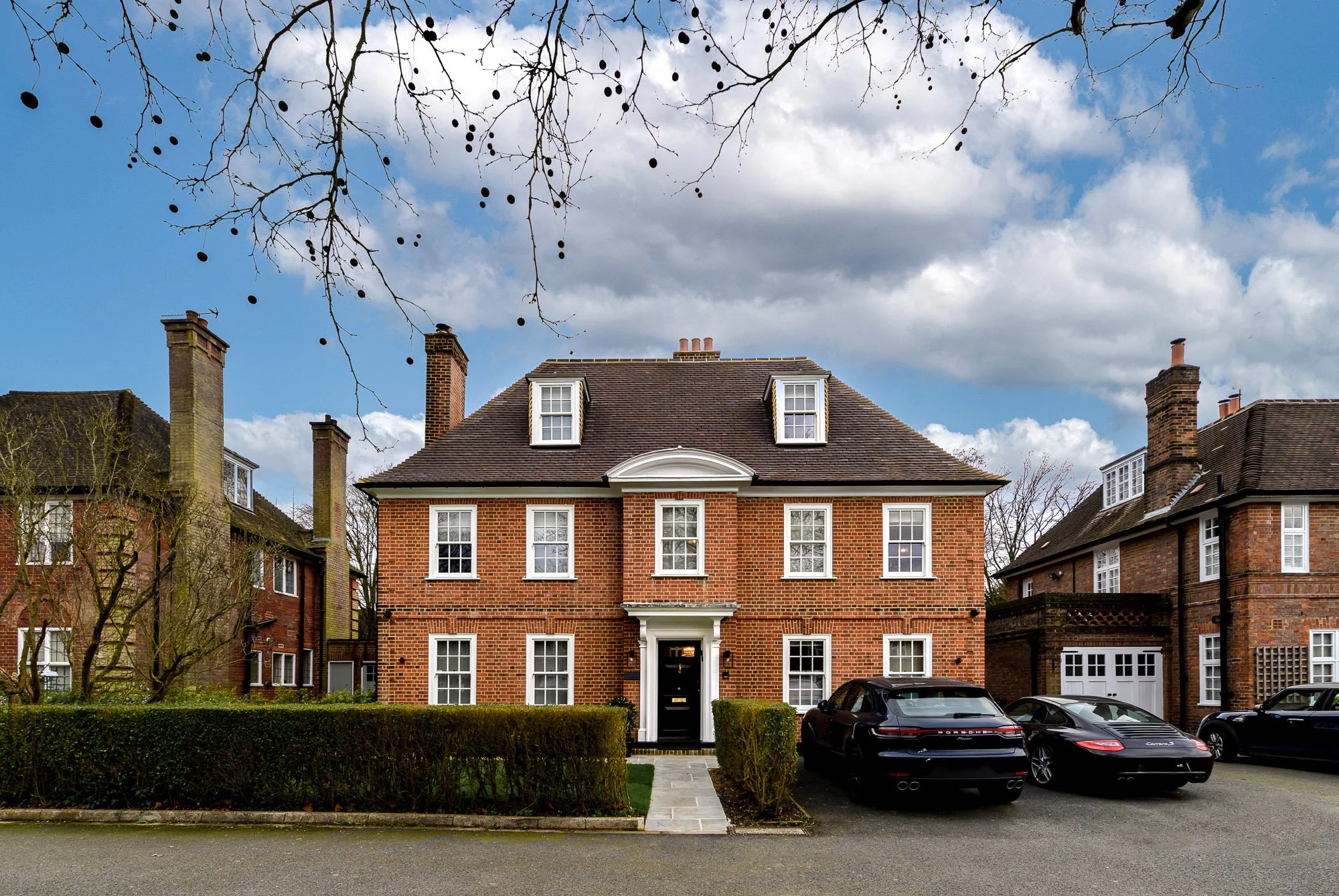
Privacy Law Doesn't Require a Person in the Frame
A common assumption is that privacy considerations only arise when someone's face is visible. UK law does not support that reading.
The Supreme Court judgment in Fearn v The Board of Trustees of the Tate Gallery (2023) is instructive here even though it was a nuisance case rather than a photography case. The court accepted that constant visual access into homes — including by visitors photographing interiors and posting them on social media — could constitute a substantial interference with the ordinary use and enjoyment of a private home. The reasoning turns on what it means to live in a home free from observation, not on whether any individual was identified.
The cases of Weller v Associated Newspapers and Murray v Big Pictures reinforce the point from a privacy angle: there is no simple rule that because something was visible, it can be freely photographed and published. Reasonable expectation of privacy depends on context, the nature of the content, and the impact of publication — not simply on where the camera was standing.
For residential interior photography, this body of case law supports the same practical conclusion: the fact that you had physical access to the home, and that the rooms were visible to you, does not by itself settle the question of what you may publish or distribute. The homeowner's reasonable expectations about their private space continue to matter after the shoot.
Four High-Stakes Scenarios Specific to Prime Residential Work
The Permission Ladder gives you a framework. These four scenarios test it against the situations that actually arise in luxury residential practice — the ones that rarely appear in generic photography guides precisely because they require knowledge of how this market actually operates.
1. The Multi-Party Cost-Split Shoot
In high-end residential photography, it is entirely common for a project shoot to be cost-shared between the interior designer, the main contractor, the lighting designer, and the joinery company. Everyone contributed to the result; everyone wants the images.
The risk is this: the interior designer has a strong relationship with the homeowner and obtains a warm, relatively informal email consent. The joinery company then assumes they are covered by association. They are not.
As Rung 4 of the Permission Ladder makes clear, permission is not transferable by default. The homeowner consented to the designer using the images. That does not extend to a joinery manufacturer featuring the same kitchen on their website and in their trade catalogue without separate clearance.
The professional approach for any cost-split shoot is to establish at the outset which parties will receive the images and to name them explicitly in the homeowner consent document. Every participating party should be cleared individually, or the lead commissioning practice should be the sole image distributor, with explicit restrictions on what recipients may do with the files.
An image shared as professional courtesy becomes a liability the moment it appears somewhere the homeowner did not expect.
2. The Tenant vs. Landlord Dilemma
Many prime London properties — particularly in Mayfair, Belgravia, and St John's Wood — are not owner-occupied. They are held on high-value assured shorthold tenancies, corporate lets, or similar arrangements. The person who commissioned the design work, and who signed off on the shoot, is the tenant. The person who owns the bricks is someone else entirely.
This creates a specific permission fracture.
The tenant holds an active Article 8 interest because the property is their current home. Their privacy interests in how the interior is depicted are real and immediate. However, they do not own the property. The landlord has separate interests — potentially including security concerns about floor plans, entrance configurations, and layout details being publicly available.
When a tenant moves out, the permission architecture does not move with them. The images remain in circulation; the homeowner's relationship with the designer ends; and if the landlord later objects to the published images on security or other grounds, the tenant's consent — however carefully worded — does not bind the landlord.
The safest position on tenanted properties is to identify both parties at the outset and consider whether both should be signatories, or at minimum whether the landlord's position has been considered and documented. Where the tenancy agreement itself restricts photography or publication, that restriction overrides any consent the tenant provides. Check before the shoot, not after the images are delivered.
3. The New Owner Security Objection
A project is complete. A formal property release is signed. The images appear on the designer's website, in a magazine feature, and in an award submission. Two years later, the property is sold.
The new owner is a high-profile individual with legitimate personal security concerns. They discover that detailed interior images — including layout, entrance points, and visible security infrastructure — are publicly accessible. They request a takedown.
The original release was a contract between the designer and the previous owner. The new owner is not a party to that contract and cannot invoke it — but they are also not bound by it in the sense of being prevented from raising their own fresh objections. Their Article 8 privacy interest in their current home is independent of whatever the previous owner agreed.
Whether a new owner can successfully compel removal of images will depend on the specific facts — what the images show, how identifiable the property is, what the original release said about duration and future objections, and whether UK GDPR considerations are engaged by the images still being processed and displayed.
The practical implication is that a well-drafted release should address what happens on property sale. It should state that the permission survives the sale in relation to the original signatory's interest, while also including a process for engaging with future objectors rather than a blunt refusal to respond. A defined takedown review process — even one that sets a high bar — is far more defensible than silence.
Properties at the top of the market change hands and change circumstances. Permission architecture that cannot accommodate that reality will eventually fail.
4. The Overriding NDA
In ultra-high-net-worth residential work, it is not unusual for a design practice to sign a non-disclosure agreement before a project begins. The NDA may be comprehensive — covering not just the client's identity but any disclosure of the project's existence, the address, the scope of work, and any visual material.
Eighteen months later, the project is complete and spectacular. The designer commissions a shoot and, in the excitement of completion, begins the permission conversation with the homeowner — forgetting that the NDA signed at the start of the engagement already answered the question, and answered it with a firm no.
An NDA in this context functions as a structural constraint that sits above all other permission discussions. It does not matter that the homeowner is now relaxed about portfolio use. It does not matter that a short written consent is obtained before the shoot. If the NDA has not been formally amended in writing by all parties, it overrides everything beneath it on the Permission Ladder.
Before initiating any publication or licensing discussion on a project where a pre-engagement NDA exists, that NDA must be reviewed. If publication is desired, the NDA must be explicitly amended to carve out the agreed uses — with that amendment signed by the relevant parties. A verbal reassurance from the client that "the NDA won't be a problem" is not an amendment.
This is worth raising not because NDAs are unusual in the luxury sector, but because they are so easily forgotten once the project enters the delivery phase. A note in the file at engagement stage — flagging the existence and scope of any NDA — is a simple safeguard against an expensive discovery two years later.
The Creeping Risk: From Optimism to Dispute
The image set exists. The project is beautiful. Everyone is excited. The images go on the designer's website. Then a magazine asks for them. Then an award entry uses them. Then a supplier requests them for their showroom. Then a developer asks to use one in a sales brochure. Then a product brand enquires about paid usage. At each stage, the new request feels incremental — just one more use, just one more channel.
By the time someone asks what the homeowner actually approved, nobody can remember clearly, there is no written record, and the images have already appeared in six different contexts. That is not a legal failure in the sense of a specific statute being breached at a single moment. It is a governance failure: a cumulative drift from a narrow original understanding to a broad commercial reality, with no permission architecture to manage the transition.
The UK's most expensive photography disputes tend not to arise from deliberate bad faith. They arise from optimism — from the working assumption that because the homeowner seemed pleased with the shoot, they would be relaxed about any use. That assumption does not survive a property sale, a change in personal circumstances, or a homeowner who simply objects to seeing their bedroom on the front of a brochure they were never told about.
The Pre-Shoot Conversation That Prevents All of This
The most effective time to structure permissions is before the first frame is taken. Not after the images are delivered, not when the supplier asks for files, and not when the dispute begins.
The pre-shoot conversation should cover, at minimum:
Authority. Who actually has the right to approve photography and publication? Owner, tenant, occupier, managing agent, and designer may not be the same person. A signature from the wrong person provides false comfort.
Scope of capture. Are the images interiors only, or does the scope include exteriors, gardens, and drone work? Drone use should be treated as a separate, explicit decision.
Identification controls. What identifying information — address, house number, postcode, geotag, caption, or drone angle — is excluded from any publication? Establish this before you arrive on site, not when the magazine editor asks for the postcode for their property listing.
Privacy-sensitive content. What areas or items are excluded from frame: children's rooms, family photographs, valuables, security systems, personal correspondence, medical items? This conversation is far easier before the shoot than after the images are delivered.
Third-party use. Which collaborators — suppliers, contractors, PR agencies, publishers — may receive or use the images? Name them. Silence is not permission.
Paid and promotional use. Is paid advertising in scope? Product promotion? Stock licensing? If the answer is "possibly, in the future," build the permission to accommodate that. It is much easier to over-scope the initial consent than to return and renegotiate after the homeowner has moved on.
Future objections. What happens if the homeowner changes their mind about certain uses in the future? A clear, workable process protects both parties. It prevents the worst-case scenario — an injunction or a formal demand to remove images from a live campaign — by creating a managed route for legitimate concerns.
A Note on BIID Professional Standards
BIID's industry guidance reflects the same practical logic developed above. It says you should obtain permission from the owner of the property in the images, warns that clients may not want their home featured in magazines or marketing materials, and states the standard clearly: get permission in full and in writing from the outset.
That is not black-letter legislation. But for practices operating under BIID membership, it represents the professional norm against which conduct will be measured if a dispute arises. "We had a verbal understanding" is not a defence that reflects well on a practice that markets itself as operating at the highest level.
What This Means for Your Practice
The question is not whether you need a property release as a formality. The question is whether your permission architecture is strong enough to carry the commercial weight you are placing on it.
For a private portfolio image on a password-protected client presentation, a simple written consent may be entirely proportionate. For a kitchen manufacturer's brochure featuring a Mayfair townhouse — distributed nationally, used in paid advertising, and available on the manufacturer's website indefinitely — something considerably more robust is required.
The Permission Ladder is a working tool, not a checklist to be completed once and filed away. Every time a new use is proposed for a set of residential images, the question should be asked: does our existing permission cover this? If the answer is uncertain, the conversation needs to happen before the files are shared, not after the brochure is printed.
This is also where the difference between photographers becomes tangible to a premium client. Most shoots begin and end with a verbal understanding. A structured shoot — where the scope, permitted uses, third-party access, metadata handling, and identification controls are agreed in writing before the first frame is taken — produces images that are not just beautiful but commercially usable, licensable, and easier to defend if questions arise later. That distinction is worth something, and premium clients understand it when it is explained clearly.
As part of the booking process for residential and architectural projects, I provide clients with the appropriate consent or release documentation as standard, so the image usage is clearly documented for the uses we have discussed, with less ambiguity later. If you would like to discuss what that looks like for your next project, the contact page is the right starting point.
Premium design work requires premium process. If your portfolio is one of your most valuable commercial assets, it should not operate on assumptions.
This article provides general UK information on copyright, privacy, consent, and image-use risk in residential photography. It is not legal advice. For projects involving high-profile clients, children, drone work, paid advertising, wide third-party licensing, or sensitive homes, obtain project-specific legal review before publication.
For IP and trademark strategy, this series has been informed by the work of Céleste Athalia Reumert Refn, IP specialist and Founder of GRAND IPR®. If your practice is at the stage of formalising how you protect, license, and leverage your creative assets commercially, her work is worth exploring directly.
Are you planning a shoot for a high-value residential project in London? Let's ensure your practice is protected from the start.
Tags: Property Release UK | Residential Interior Photography | Photography Consent | Editorial vs Commercial Photography | UK GDPR Photography | Homeowner Privacy | Image Licensing for Designers | Drone Photography UK